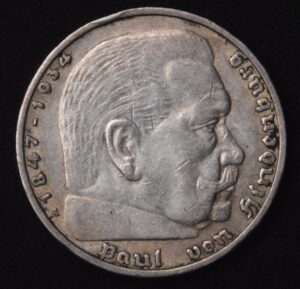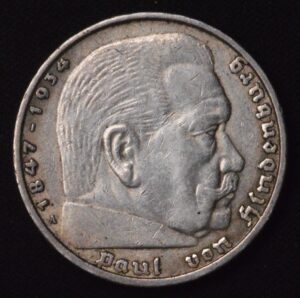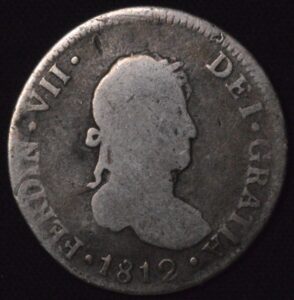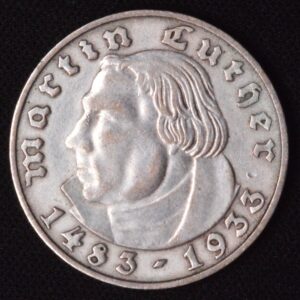
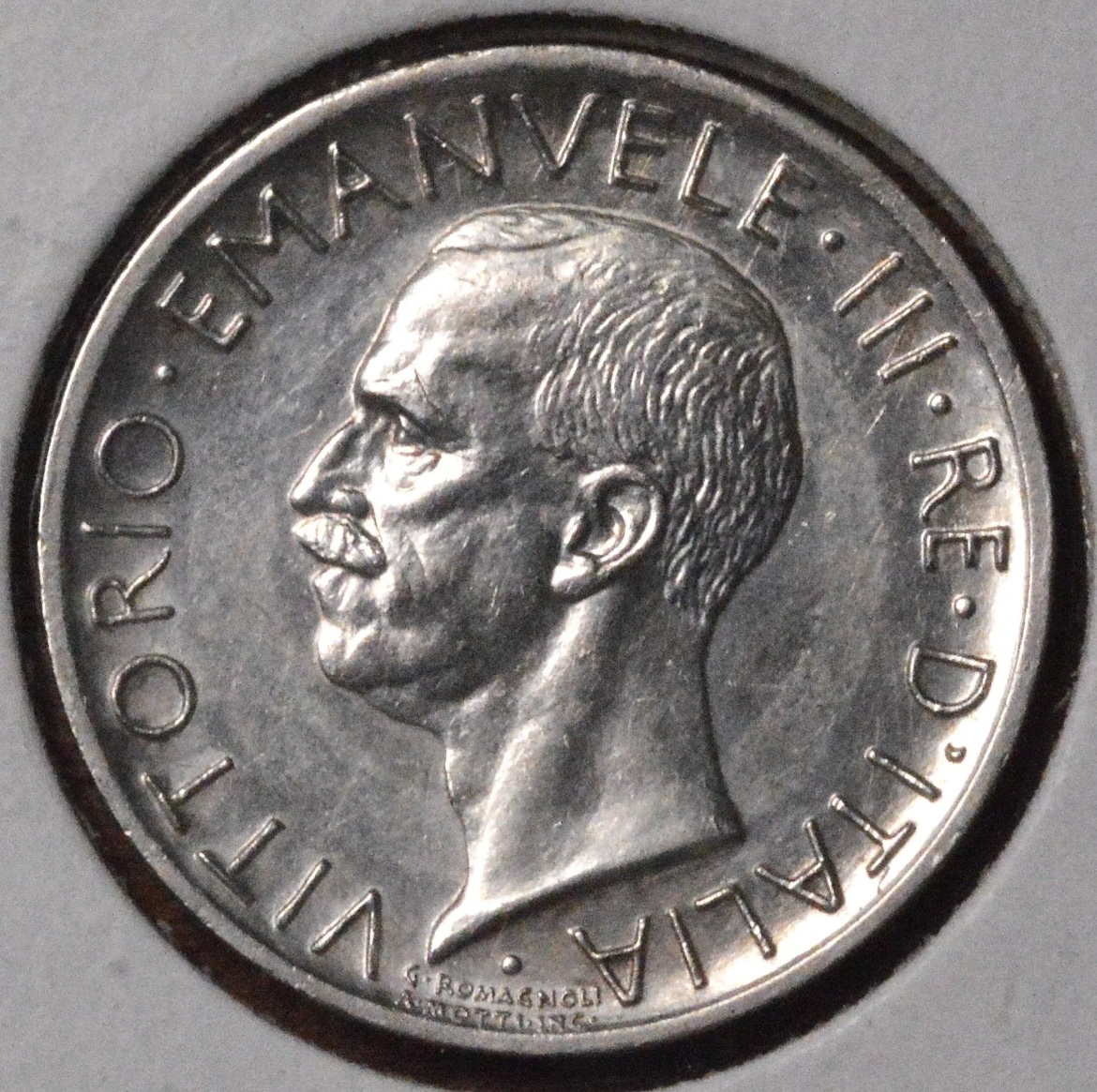
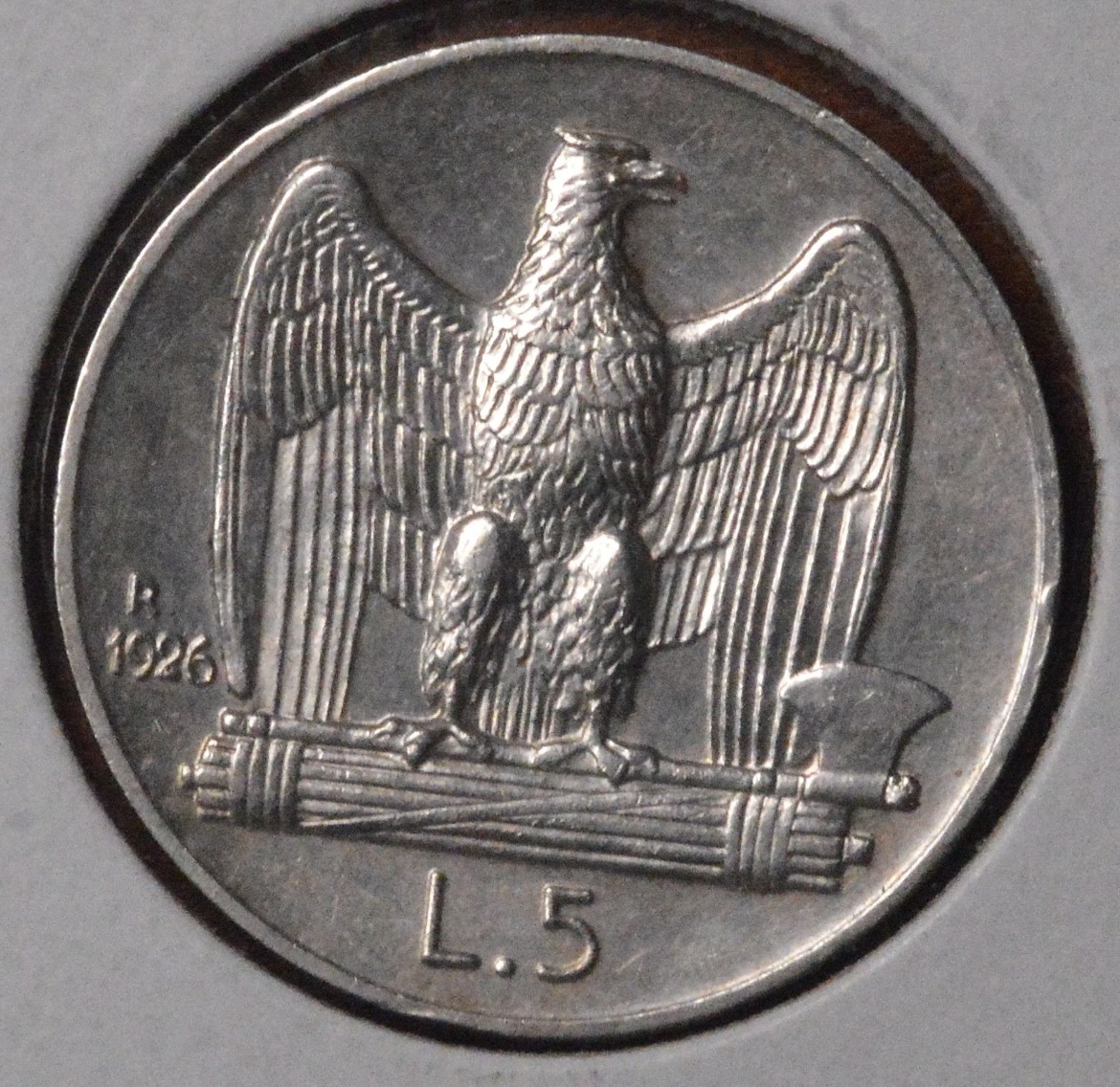
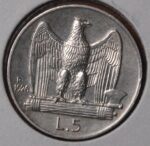
This Italy 1926 Emanuele III 5 Silver Lire coin is a notable piece from the early 20th century, reflecting Italy’s monetary system during the reign of King Emanuele III. Made of silver, this coin was part of Italy’s standard currency in circulation during the 1920s. Its design and composition highlight the country’s economic stability and royal symbolism at the time, making it a significant collectible for those interested in Italian history and numismatics.
The obverse of the coin features a detailed portrait of King Emanuele III, facing right, wearing a laurel wreath or crown, symbolizing his royal authority. Surrounding the portrait are inscriptions that include the king’s name and titles, emphasizing his sovereignty. The reverse typically displays the denomination of 5 Lire along with the year of minting, 1926, and often includes decorative elements or national symbols, such as Italy’s emblem or laurel branches, which reinforce national pride.
This coin was minted during a period of relative stability in Italy, prior to the economic upheavals of the late 1920s and 1930s. It served as a standard currency for everyday transactions and was part of the broader monetary system established under the Kingdom of Italy. As a collectible, it offers insight into Italy’s royal history, monetary practices, and artistic style of the era, making it a valued addition to any collection of early 20th-century coins.
Condition-wise, coins from this period can vary, but many retain good detail with minimal wear, especially if well-preserved. The silver content adds intrinsic value, and the coin’s historical significance further enhances its desirability. Proper storage can help preserve its condition and ensure it remains a durable and meaningful artifact.
Overall, the 1926 Italy Emanuele III 5 Silver Lire coin is an important piece of Italian numismatic history. It embodies the era of monarchy and national pride in Italy before the country transitioned to different political phases. For collectors and history enthusiasts, this coin provides a tangible connection to Italy’s royal past and its monetary heritage during the early 20th century.