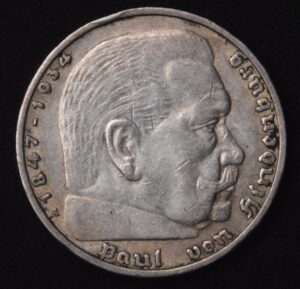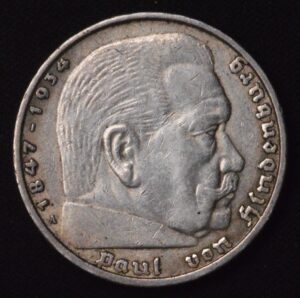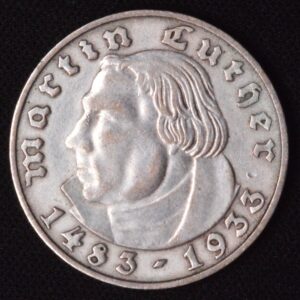
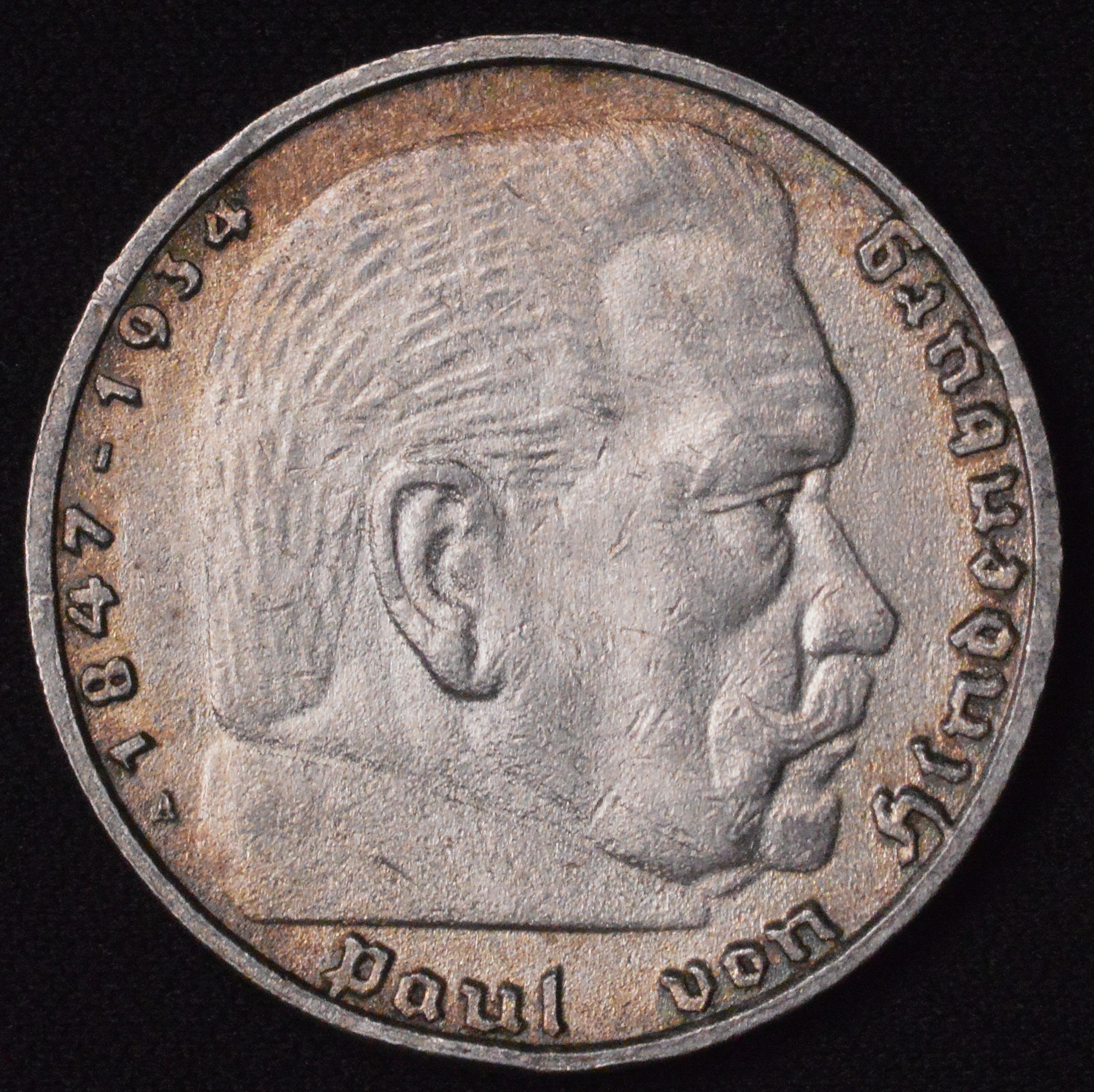
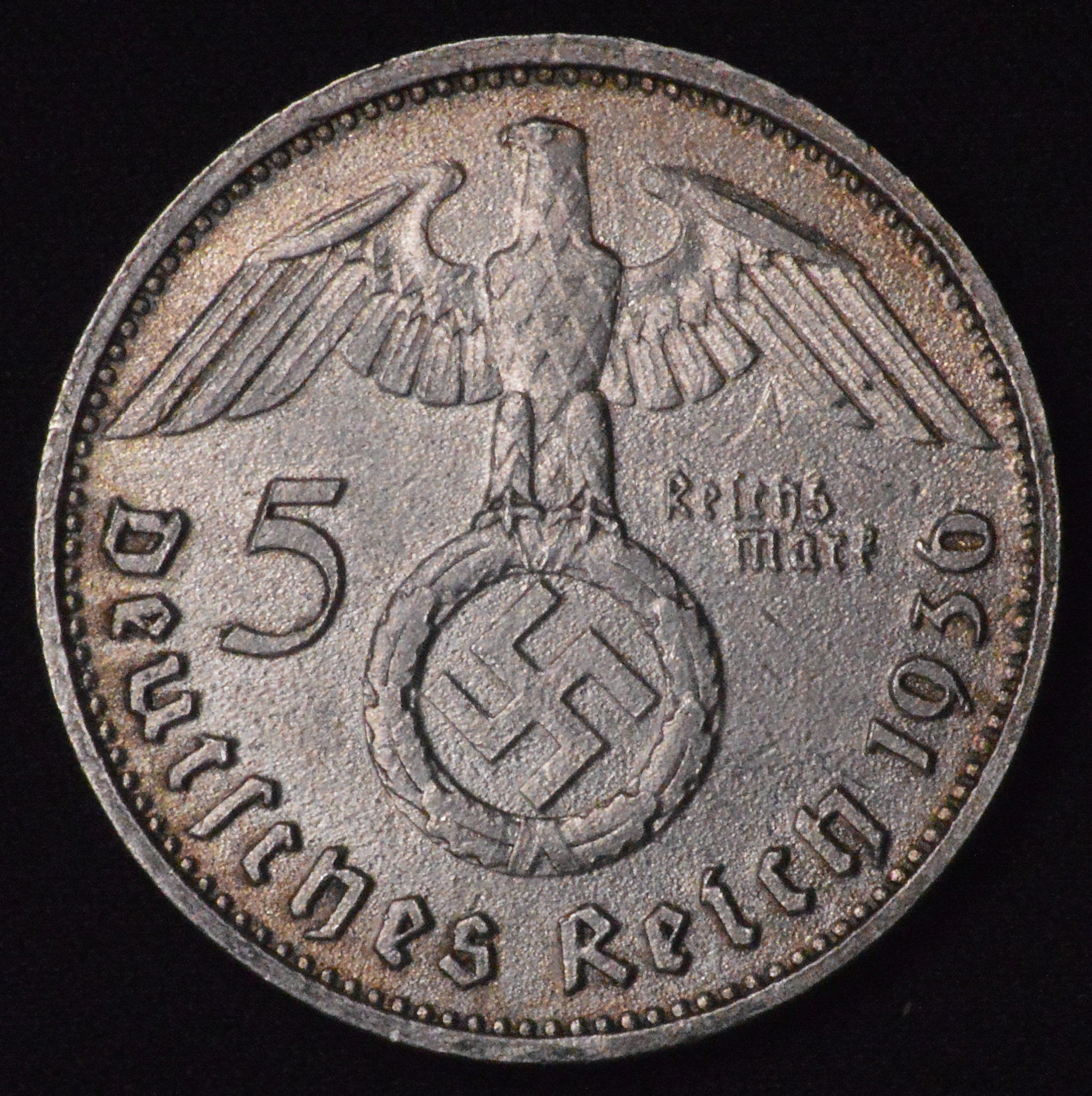
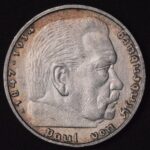
This 1936-A German Third Reich Silver 5 Mark coin is a notable piece of historical currency, representing a significant period in Germany’s history. Crafted from silver, it reflects the standard coinage material used during that era, giving it both value and durability. The coin’s design features intricate details that highlight the craftsmanship of the period, making it a fascinating collectible for numismatists and history enthusiasts alike.
The obverse side of the coin typically displays the German eagle emblem, symbolizing strength and sovereignty, along with the denomination and the year of minting. The reverse usually features the imperial eagle, a traditional symbol of German power, along with inscriptions that denote the coin’s value and origin. These details are finely engraved, showcasing the artistry and precision of the minting process in 1936.
This particular coin was produced during a pivotal time in German history, just a few years before the outbreak of World War II. As such, it serves as a tangible reminder of the era’s political and economic climate. Collectors value these coins not only for their silver content but also for their historical significance, making them prized additions to any collection of wartime or Third Reich memorabilia.
Condition-wise, coins from this period can vary, but many retain a good level of detail and minimal wear, especially if stored properly over the years. The silver composition means it may display some patina or toning, which can add to its vintage appeal. It’s advisable to examine the coin for any signs of damage or cleaning, as these factors can affect its value and authenticity.
Overall, the 1936-A German Third Reich Silver 5 Mark coin is a compelling piece for collectors interested in historical currency or World War II memorabilia. Its silver content and historical background make it both a valuable and meaningful artifact. Whether kept as a collectible or an educational piece, this coin offers a tangible connection to a complex and significant period in world history.