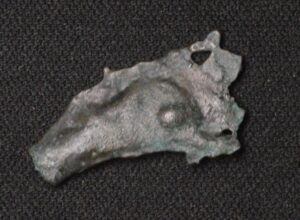
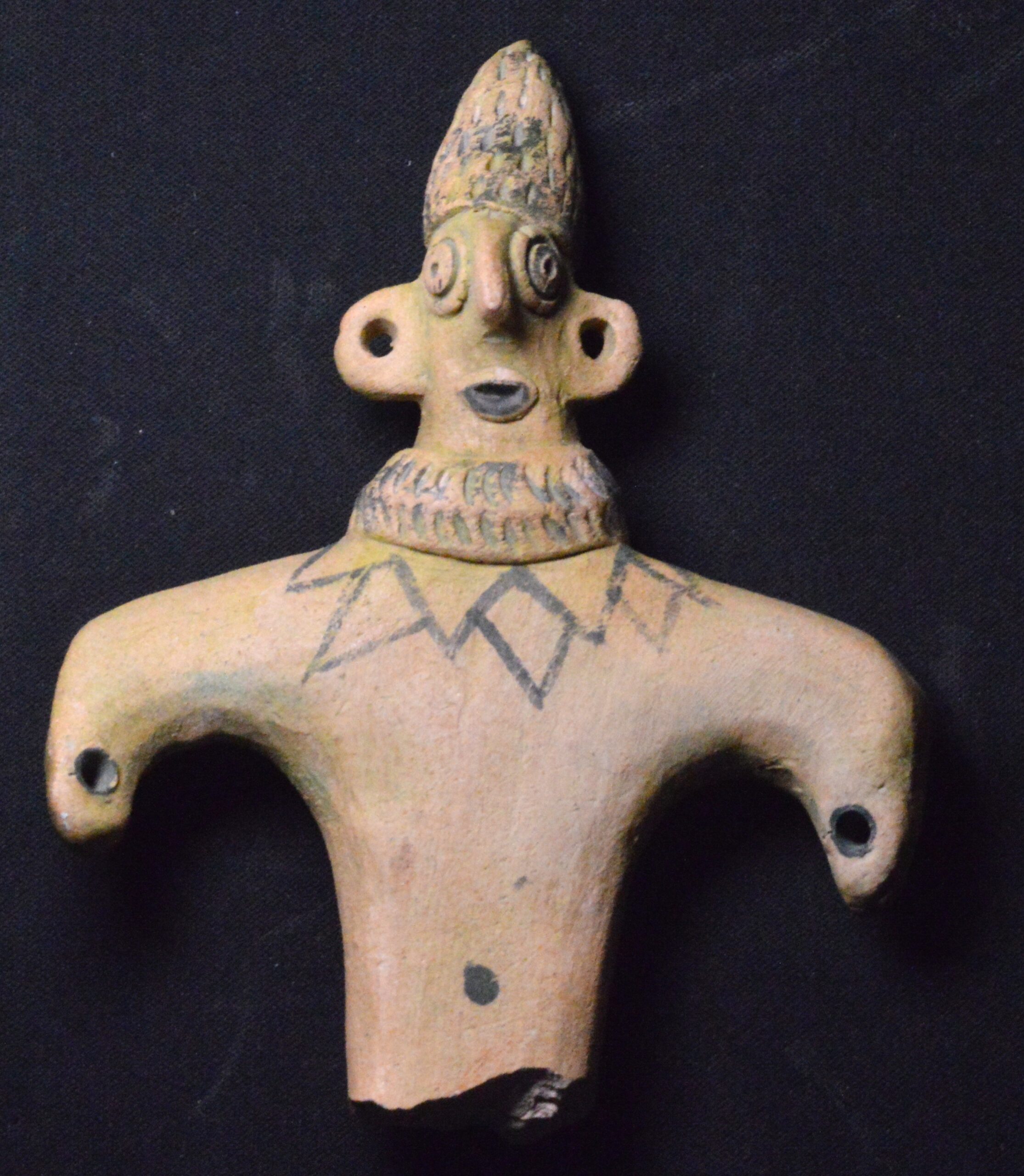
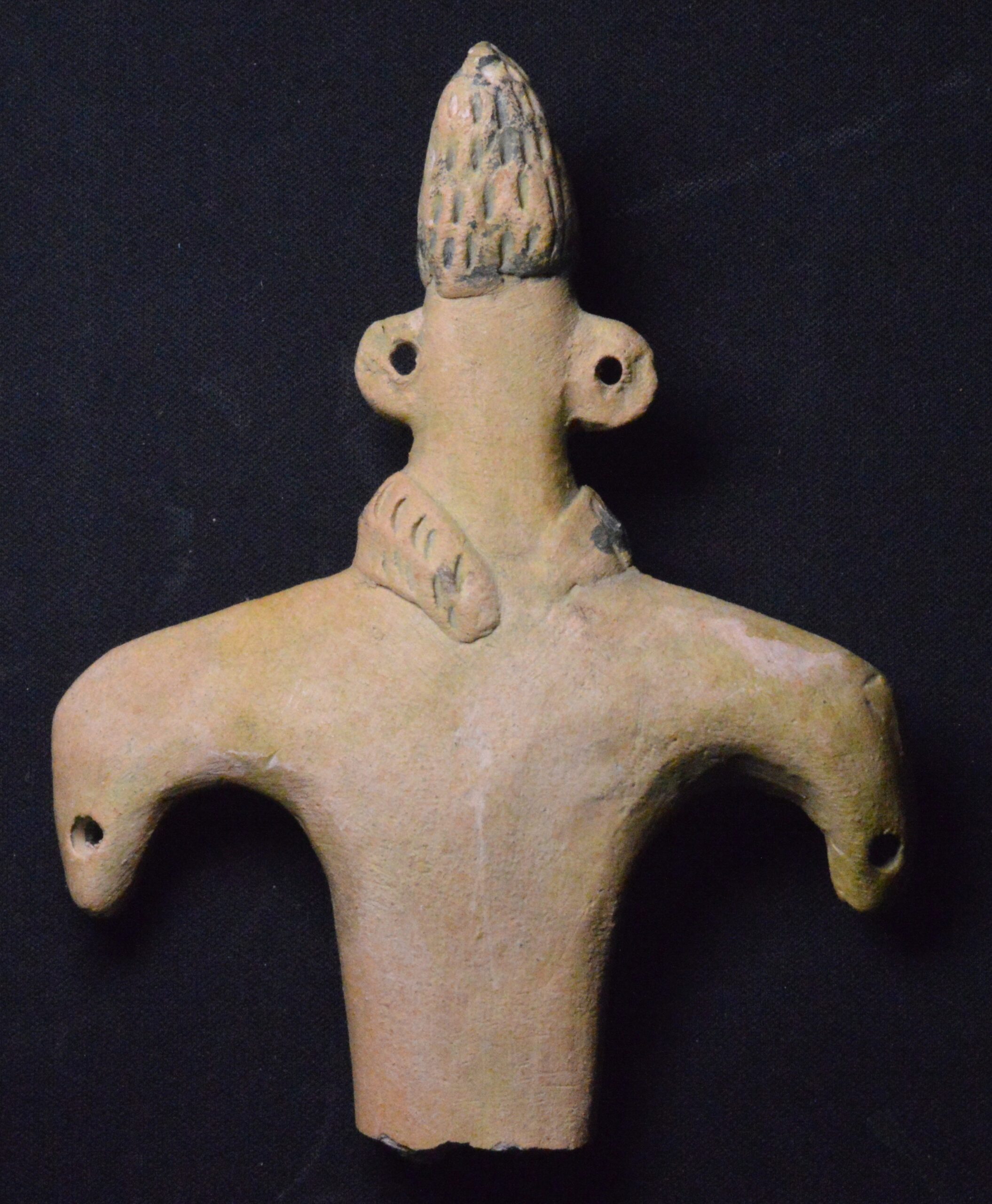


The artifact is a fragment of a terracotta statuette representing a tribal man from the Neolithic period, associated with the Cucuteni-Trypillian culture. This culture flourished in Eastern Europe, particularly in regions now within Moldova, Ukraine, and Romania, from approximately 5500 to 2750 BCE. The piece is characterized by its rough yet expressive craftsmanship, capturing the essence of human form in a stylized manner that emphasizes certain features rather than detailed realism.
As a half-figure, the statuette reveals part of the figure’s upper body, likely including the head, shoulders, and possibly one arm or side. The facial features are simplified but distinct, with indications of eyes, nose, and mouth that might have held symbolic significance. The posture and proportions suggest a focus on identity or status within the tribe, possibly used in ritual contexts or as a personal talisman. Its handmade nature reflects the communal artistic traditions of the Neolithic communities that created it.
The surface of the terracotta shows signs of wear and age, with some areas smoothed from handling or ritual use. The clay’s color varies from reddish to brownish hues, typical of the firing techniques employed by these early artisans. Although only a fragment remains, the craftsmanship indicates a deliberate effort to portray a human figure, perhaps as part of a larger ritual or symbolic ensemble that involved other similar or complete figurines.
Given its partial form, the statuette invites interpretations related to identity, social hierarchy, or spiritual belief. Such figures may have served as ancestral representations, protective talismans, or symbols of tribal power. The preserved features suggest the importance of individual identity within the community, emphasizing attributes that might have been associated with leadership or spiritual authority.
In summary, this half-statue of a tribal man exemplifies the artistic and cultural practices of the Neolithic Cucuteni-Trypillian people. Its fragmentary state hints at a broader tradition of figurative representation used for social or religious purposes. Despite its incomplete form, it provides insight into the symbolic and ritualistic life of early European communities, highlighting their capacity for expressive craftsmanship and spiritual symbolism.